

Plan a Tromsø trip in this order: choose the season for the experience you want, count your usable days, find accommodation that suits the journeys, then organise the arrival and your most important activities. Leave enough space for weather, late evenings and rest.
This Tromso travel guide helps you make those decisions without turning a holiday into a list of rushed transfers. A central city stay, a quieter base outside the centre and a trip built around outdoor excursions all need different arrangements. Start with the people travelling and the experience that matters most. Last updated: 15 November 2026.
Choosing things to do around the trip you actually want
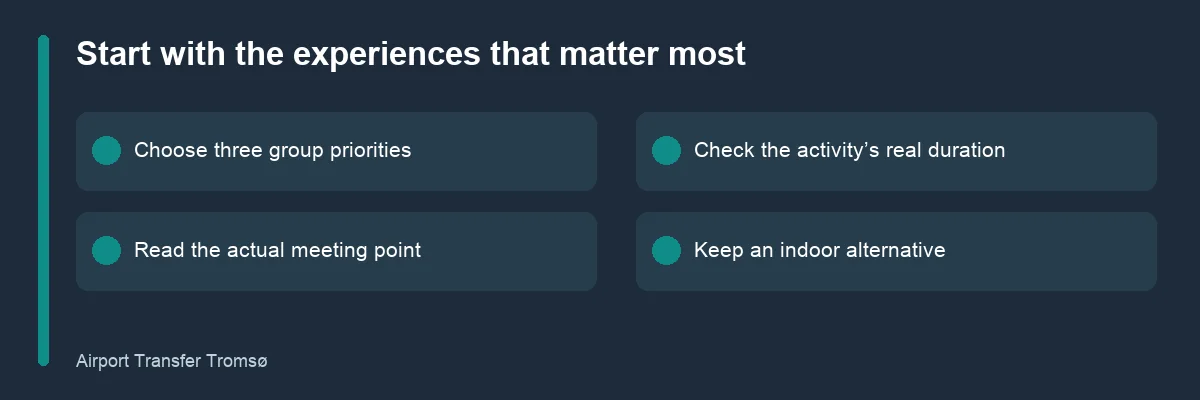
Write down three priorities before looking at a long activity list. They might be seeing the aurora, spending time in the winter landscape and enjoying the city. Another group might prefer museums, food and a summer view. This makes it easier to choose between two appealing bookings that compete for the same afternoon.
For Arctic history, the Polar Museum explores expeditions, trapping and life connected with the north. Polaria focuses on Arctic marine environments, with exhibitions, aquariums and seals. Choose the subject that interests your group rather than treating both as compulsory stops. Check current opening information and allow time to look properly instead of fitting a visit between two tight departures.
The Arctic Cathedral and Fjellheisen offer different reasons to cross to Tromsdalen: architecture and the view from above the city. Both have their own practical arrangements, covered below. A visit should fit the weather and the rest of your day, rather than depending on an ideal photograph you found while planning.
For an aurora-focused stay, use our northern lights guide to choose dates and compare outing formats. Do not assume a display follows the first clear evening. Several possible nights give you more room to respond to conditions, but every paid outing should still fit your budget and the holiday you want.
Some activities include transport; others begin at a venue outside the centre. Read the meeting point before paying. A listing described as a Tromsø experience does not necessarily start at your hotel. Put the actual departure and return in your plan, including any separate journey you need to reach the meeting point.
Balance outdoor and indoor time. After a long excursion, a relaxed meal may be more welcome than another departure. Keep at least one option that works in poor weather. A good trip includes things you would enjoy even if the conditions do not deliver the view or wildlife sighting you hoped for.

How long to stay: practical three, four and five day plans
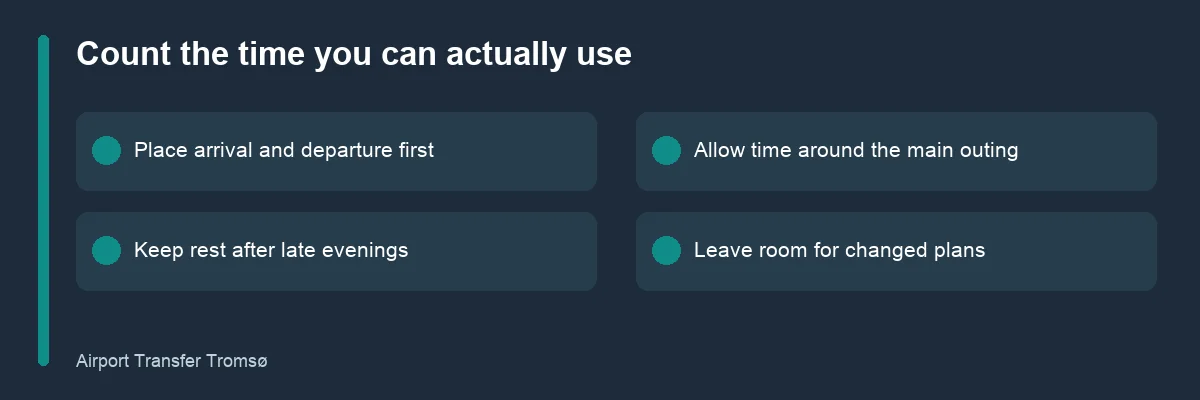
Count usable time, not just hotel nights. A late flight in and an early flight out can make a three-night booking much shorter than it sounds. Place arrival and departure on the plan first, then add the hours you genuinely have for activities. Keep a flight day from depending on a distant excursion returning exactly on schedule.
A three-day outline suits a focused visit if you accept that you will choose between activities. Use arrival time for settling in and a nearby walk or meal. Keep the fullest day for the main experience, with a second city or outdoor plan that fits around it. Use the final day according to the flight, rather than treating it as another unrestricted sightseeing day.
A four-day outline gives more room for a city day and a longer outing. You can place the main weather-sensitive activity early enough to consider another opportunity later, subject to availability and cost. Keep one evening less committed, especially if you expect a late aurora return. Extra time is useful only if you do not immediately fill it with another inflexible booking.
A five-day outline can separate the city, a regional outing and seasonal activities without putting everything on consecutive long days. It may suit families or anyone who prefers a slower pace. Consider whether an additional night gives you flexibility worth more than an extra excursion. The answer depends on your priorities, flight options and accommodation cost.
| Length | A useful focus | Main tradeoff |
|---|---|---|
| Three days | One main experience plus selected city time | Less room for weather changes or a late arrival |
| Four days | A fuller city visit and one longer outing | Still needs choices between competing activities |
| Five days | A slower mix with room between long outings | Higher accommodation and daily spending |
These are planning outlines, not promises of what will fit every season. Put the actual duration of each booked product into your Tromso itinerary. Include getting ready, reaching the meeting point and recovering afterwards. A tour’s headline activity time is not always the total time away from your accommodation.
If you are arriving by ship, attending an event or travelling with a larger group, the fixed timetable should lead the plan. A flexible afternoon cannot compensate for missing a ship departure or a meeting. Keep the transport confirmation next to the relevant ticket so the whole group follows the same arrangement.
Give arrival evening a small, useful job: reach the accommodation, understand the entrance and get ready for the first full day. If you have spare time, add a nearby meal or walk. Avoid buying a separate activity solely to use the hours after landing when a delayed flight would leave no sensible way to reach it. An uncomplicated first evening can be valuable after several travel connections.
Where to stay: judge the address as well as the room
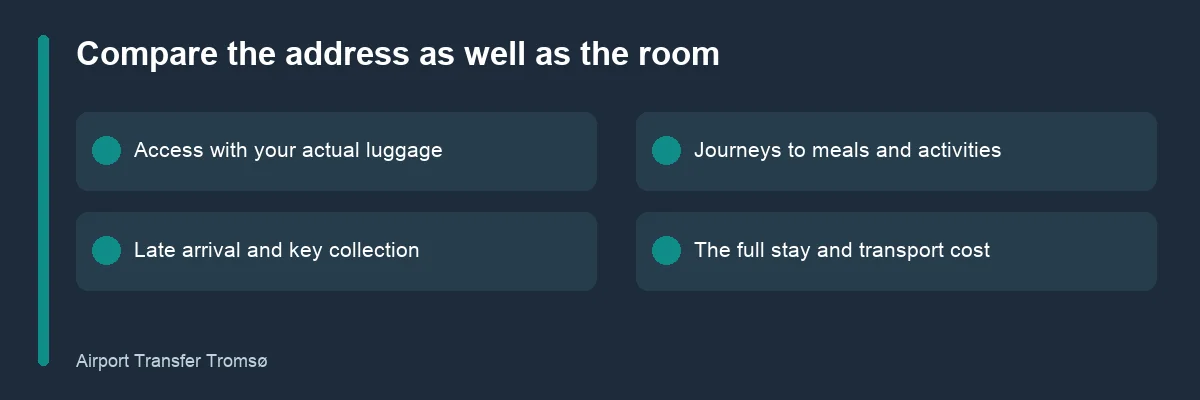
For a city-focused visit, look at the walk from the property to the places you expect to use most. A central address can reduce the number of journeys, but the exact entrance and surface conditions still matter. Check the route with luggage in mind, especially if you intend to arrive by bus.
Hotel names you may encounter while comparing include Clarion Hotel The Edge, Scandic Ishavshotel and Radisson Blu Hotel Tromsø. Compare their current room offers, location and access details directly. A familiar name is not enough to establish the right choice for your group. Look at the room arrangement, breakfast, check-in process and cancellation terms.
A quieter base can suit a trip built around the surrounding landscape. Work out how you will reach meals, activities and the city before booking it. A lower room price can lose its advantage if every outing needs another paid journey. Ask the property which activities collect there and what options exist for guests without a car.
An apartment can be useful when kitchen space or a separate living area matters. Check how keys are collected, whether the entrance involves steps and what happens after a late flight. Do not assume somebody will be at reception. Save the access instructions somewhere you can read if the arrival phone signal is inconvenient.
For an early departure, confirm the return collection point. A property may have more than one entrance, and a nearby street may be easier for a vehicle to reach. Our transport guide explains the hotel and luggage details to share. Keep your accommodation confirmation and the full address ready when asking for a transfer quote.
When deciding where to stay Tromso, make one whole-trip comparison. Add room costs, breakfast or groceries and the transport you would actually need. Give comfort and location their proper value, but avoid paying for a feature you will barely use because every day has already been planned away from the property.
When to go: weather, darkness and daylight through the year
Choose the season by the experience rather than a single temperature average. Visit Tromsø describes winter broadly as November to April, with polar night for part of that period. Summer brings long daylight and the midnight sun, while late summer and autumn lead back towards dark evenings. Conditions still vary within each season.
For winter clothing, driving and activity logistics, read our complete winter guide. For aurora dates and conditions, use the separate northern lights guide. You cannot combine every seasonal experience on one short visit: midnight sun and dark-sky aurora viewing belong to different parts of the year.
| Month | Planning question |
|---|---|
| January | How does the changing polar-night period affect your outdoor plans? |
| February | How will you balance growing daylight with evening outings? |
| March | Which winter activities operate on your chosen dates? |
| April | Are the seasonal products and aurora dates you want still available? |
| May | What daylight and ground conditions apply to your particular week? |
| June | How will you use the long daylight without losing a sensible sleep routine? |
| July | Does your travel week fall within the midnight-sun period? |
| August | Are you planning for summer days or later dark evenings? |
| September | Which autumn and aurora activities fit together? |
| October | What current conditions affect the outdoor plans you are considering? |
| November | Do your activities depend on snow, and what is the alternative? |
| December | Have you checked holiday opening and collection arrangements? |
The table helps you ask the right questions; it is not a forecast. Check current weather near departure and again before a longer outing. Review the forecast for the activity location, not only the city. Ask the provider how weather affects its programme and read the applicable change or cancellation terms before committing.
Keep your flight day adaptable in every season. Weather affects more than outdoor comfort: it can alter access, the view and how much travelling your group wants to do. Avoid a plan in which the entire holiday succeeds only if the first arrival and every later connection happen exactly on time.
A realistic budget starts with the total trip
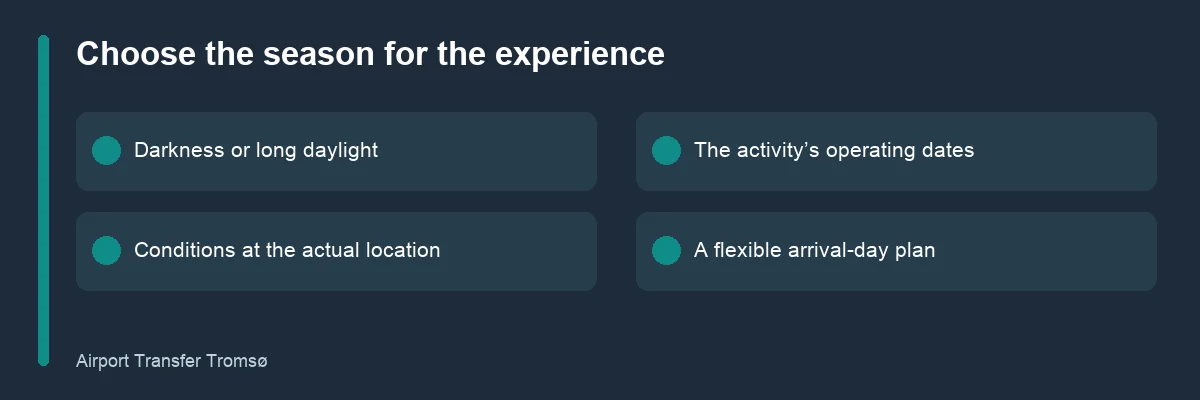
Build the budget from actual offers for the dates you can travel. Separate flights, accommodation, food, activities and local transport. Record the price for the whole party rather than mixing per-person tickets with per-vehicle quotes. Check the currency and what is included before comparing two apparently similar totals.
Accommodation and activity choices can change the budget more than small daily savings. Decide which experience is worth paying for and which plans you are happy to keep simple. A museum visit, city walk and unhurried meal can be valuable parts of the trip without adding another major excursion.
For transport, compare the complete journey. A bus can be economical when the stop and timetable fit, while a private transfer can be useful for several travellers and luggage. Read the airport guide before choosing. Include the final walk and return arrangement, rather than comparing only the first advertised fare.
Keep some room for a changed plan. You might decide to buy another activity ticket, take a car instead of walking or spend a weather-affected afternoon indoors. This allowance is easier to manage when it is planned rather than treated as a failure of the original budget.
Our prices are agreed upfront. Booking requires no prepayment, with free cancellation and payment by card, cash or invoice. Ask for a quote using the actual journey details. A generic price from a different group, date or destination is not a useful substitute for the arrangement you need.
Compare inclusions before choosing the cheaper-looking activity. Guiding, clothing, meals, photographs and transport can be bundled differently. Write down the items you would otherwise need to arrange, then compare the resulting total. A higher ticket price may include something useful, but there is little value in paying extra for an inclusion your group does not want. Save the description that applies when you book, alongside the confirmation and the provider’s contact details.
Travelling with kids: plan for the least flexible passenger
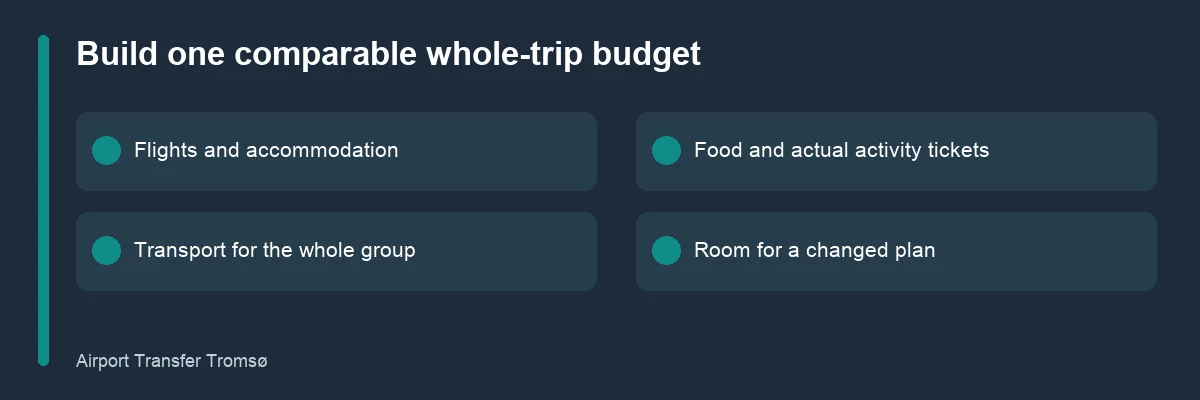
Choose the pace around the youngest or least comfortable traveller. A child who enjoys a short outdoor activity may not enjoy a long wait at night. Read each provider’s age limits, participation requirements and clothing information before booking. A family-friendly label should start the enquiry rather than finish it.
Polaria is one indoor option to consider for Arctic marine exhibits. A city walk with frequent warm breaks may suit another part of the day. Choose by your children’s interests and attention span instead of trying to complete every attraction. Keep food, spare clothing and the next toilet opportunity in the practical plan.
Ask about suitable child seats before arranging a vehicle, giving the information the operator needs to confirm the arrangement. Include the pushchair and luggage as well as the passenger count. Do not assume a seat is included or available because a car has enough passenger places. Keep the written confirmation with the rest of the booking.
For a family aurora outing, decide the latest return time you could comfortably manage. Compare a shared tour’s schedule with a private option and check what is supplied in each. Avoid booking a late evening immediately before a demanding early start just because both are technically available.
Give children a clear version of the day: where you are going, when there will be food and what happens afterwards. Keep a familiar activity available for quieter time at the accommodation. A slower hour can help the whole group enjoy the next outing instead of turning the holiday into a series of rushed departures.
Tromsø, Rovaniemi or Abisko: choose for more than the aurora
Choose the destination you would enjoy if the northern lights did not appear. Tromsø offers a city-and-coastal setting with museums, restaurants and seasonal excursions. Rovaniemi is a different Finnish Lapland trip, particularly worth comparing when Santa Claus Village is central to a family’s plans. Abisko suits travellers considering a stay connected with its national-park setting.
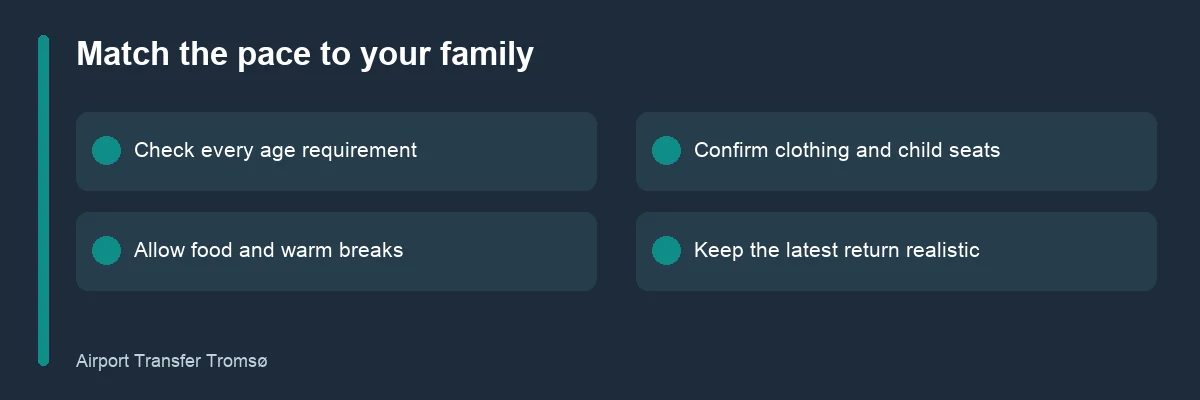
Rovaniemi’s official tourism information places Santa Claus Village on the Arctic Circle and describes visits through the year. Compare the specific activities your family wants and their operating dates. Do not assume that a Christmas-themed destination automatically provides the same snow or darkness in every month.
The Swedish Tourist Association operates Abisko Turiststation and Aurora Sky Station in the national-park area. Compare the accommodation, activities and access for your dates. A mountain viewing product has its own weather arrangements, so read the alternative programme rather than treating the destination’s aurora reputation as a guarantee.
Look at the whole travel day for each destination. Flight or rail connections, arrival time, transfers and accommodation location may matter more than an appealing headline. For a short holiday, a complicated connection can remove time you hoped to spend outdoors. Compare realistic itineraries using current transport information.
These are alternative holidays to assess, not a suggested private driving route between countries. Pick one main base if your available time is limited, then organise the arrival for that destination. Add a second region only when you have confirmed the connections and genuinely want the travel involved.
Arctic Cathedral: visiting the building, not just photographing it
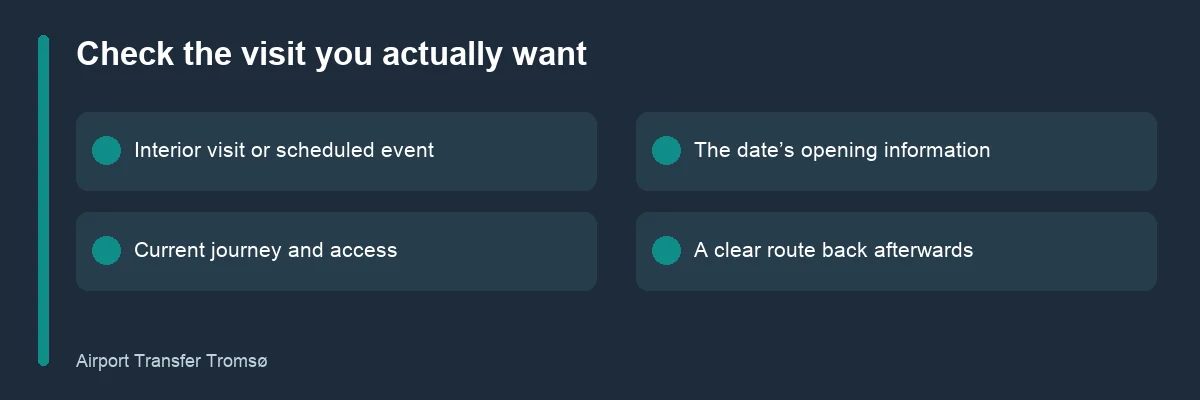
The Arctic Cathedral is in Tromsdalen, across the water from the city centre. Decide whether you want an interior visit, an exterior view or a scheduled concert, then check the information for that purpose. They do not necessarily share the same access arrangements or ticket.
The cathedral publishes general opening information and specific daily changes. Check the date of your visit rather than copying a general schedule into the itinerary. Services, events and other arrangements can affect access. If you want a concert, confirm the programme and admission separately before organising the evening around it.
Check the current journey as well. The cathedral’s website has access information, and road arrangements can change. Use the actual address in your journey planner and consider the walk, weather and surface conditions. A short-looking map route is not enough to decide that everyone in your group will be comfortable walking it.
If you combine the visit with another Tromsdalen stop, leave enough time for both. Confirm the next booking before assuming you can walk straight from one to the other. Keep the return to your accommodation clear, especially for an evening event or a group whose members may leave at different times.
Fjellheisen: cable-car tickets, views and the return
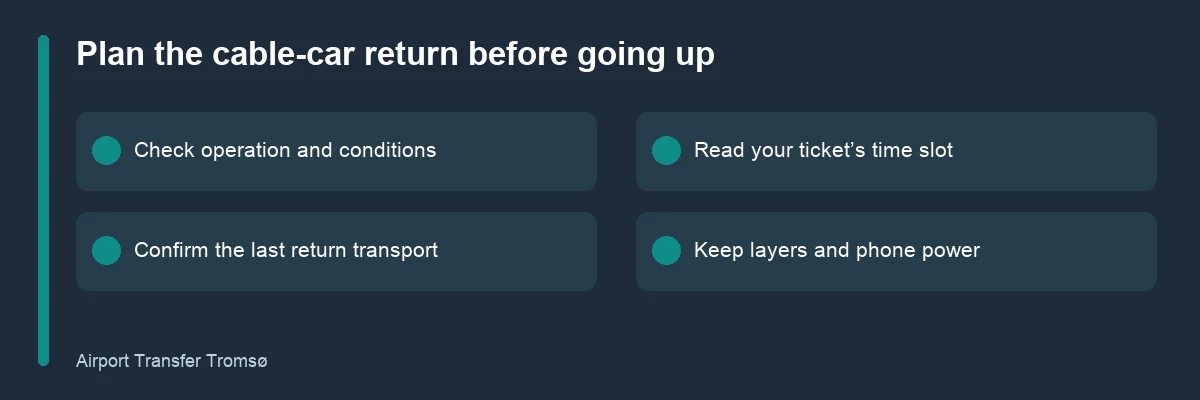
Fjellheisen carries visitors to Storsteinen above Tromsø for views of the city, water and mountains. Choose the timing for the light you want, then check operating information and the forecast. Strong wind or difficult weather can affect operation, and low visibility can change the experience even when the cable car runs.
The operator sells tickets for selected time slots. Read the current ticket instructions before buying and ask the operator about changes if your plans move. Allow time to reach the lower station and find the correct entrance. Do not treat the cable-car time as the moment you should leave your hotel.
Check transport independently of the cable car’s closing time. The last available shuttle or bus may be earlier than the final cable-car return. Read Fjellheisen’s current practical information for shuttle arrangements, parking and access. This is particularly useful during construction or other temporary changes.
Wear appropriate layers for time outside at the viewpoint and follow the operator’s instructions about where to walk. Going up by cable car does not establish that every onward mountain route suits your experience or the conditions. If the view is poor, decide whether to keep the visit or use another part of your itinerary.
For a private collection afterwards, agree where and when to meet and how changes will be communicated. Keep enough phone power for the return. A clear arrangement at the lower station is easier than trying to organise a car while your group is already tired and waiting outside.
Frequently asked questions
How many days should I spend in Tromsø?
Three days can suit a focused visit, while four or five give more room for a city day, a longer outing and weather changes. Count usable time after arrival and before departure rather than relying on the number of hotel nights.
When should I visit for northern lights?
The usual viewing season runs from late August to early April, with conditions affecting visibility. Choose several possible evenings where practical and make sure the rest of the holiday also appeals to you.
Should I stay in the centre?
A central base can reduce journeys for a city-focused stay. A quieter property may suit a different trip, but compare its actual transport needs, activity pickup points and meal options before deciding.
Do I need to book every activity before arriving?
Prioritise the activities that matter most and read their availability and cancellation terms. Keep space around weather-sensitive plans and avoid filling every free hour before you understand the full journey and duration.
Are attraction tickets included in a transport booking?
Do not assume so. Confirm each activity or attraction ticket separately unless your written booking explicitly includes it. A transfer or chauffeur arrangement should clearly state the driving service being provided.
What should I organise first after choosing accommodation?
Settle the arrival, including the flight details, full address and access instructions. Then place your main activities and the departure journey in the itinerary before filling the remaining time.
Author: Aksel Berg, Airport Transfer Tromsø team member. Planning information checked against Visit Tromsø and the relevant attraction and destination operators.
Use the topic guides to plan the rest of your stay:
- Tromsø Airport (TOS) Guide: Arrivals, Facilities and Getting Into Town
- Northern Lights in Tromsø: When, Where and How to See Them
- Getting Around Tromsø: Taxis, Buses, Private Drivers and Car Hire
- Tromsø in Winter: The Complete Travel Guide
- Best Day Trips from Tromsø: Fjords, Islands and the Lyngen Alps
- Luxury Travel in Tromsø: Hotels, Lodges, Dining and VIP Transport
- Tromsø Cruise Port Guide: Where Ships Dock and How to Make the Most of Your Stop
- Business, Events and Group Travel in Tromsø
- Midnight Sun in Tromsø: Dates, Best Spots and Summer Travel Guide
Related guides
- Things to Do in Tromsø: The Local's List
- How Many Days in Tromsø? 3, 4 and 5 Day Itineraries
- Where to Stay in Tromsø: Best Areas and Hotels
- Tromsø Weather by Month
- Is Tromsø Expensive? A Realistic Trip Budget
- Tromsø with Kids: Family Travel Tips and Activities
- Tromsø vs Rovaniemi vs Abisko: Which Arctic Trip Is Right for You?
- Arctic Cathedral Tromsø: Visitor Guide
- Fjellheisen Cable Car: Tickets, Views and Getting There