
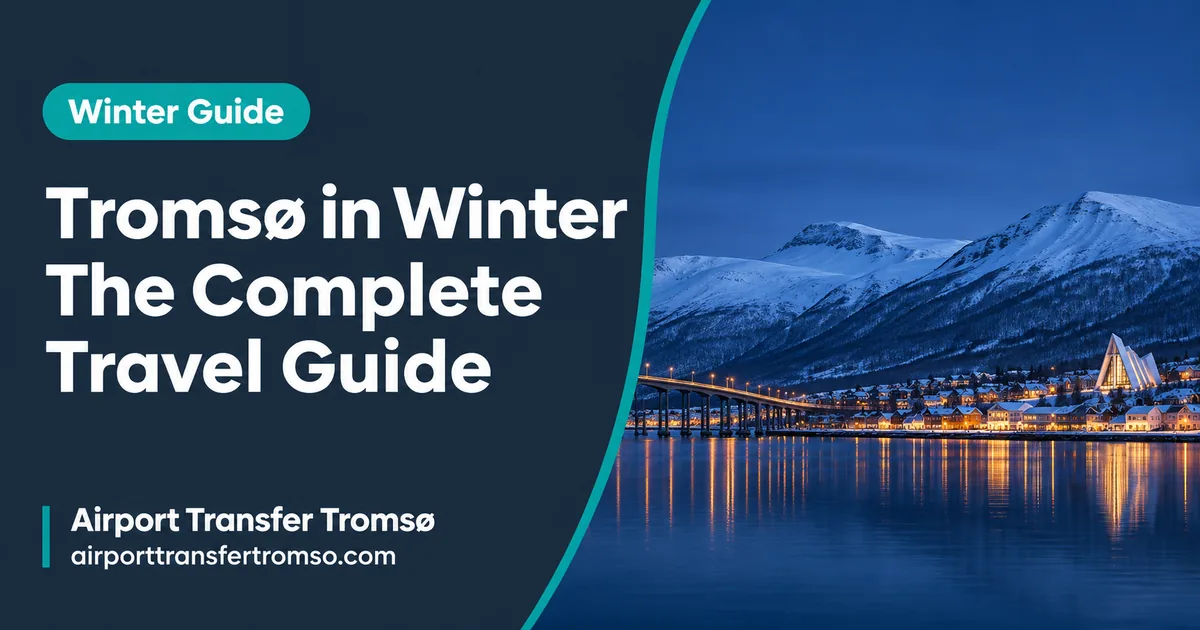

Tromsø in winter combines short days, changing weather and outdoor activities that need planning. Choose the month for the experience you want, bring clothing for standing still as well as walking, and leave room in your itinerary for conditions to change.
A winter trip becomes easier when the arrival, daily transport and activity bookings fit together. You can enjoy the city without driving, and a bus or organised excursion may be the right choice for much of your stay. Use a private car for the journeys where a direct collection or flexible schedule helps. Last updated: 14 November 2026.
Winter driving: roads, tunnels and sensible alternatives
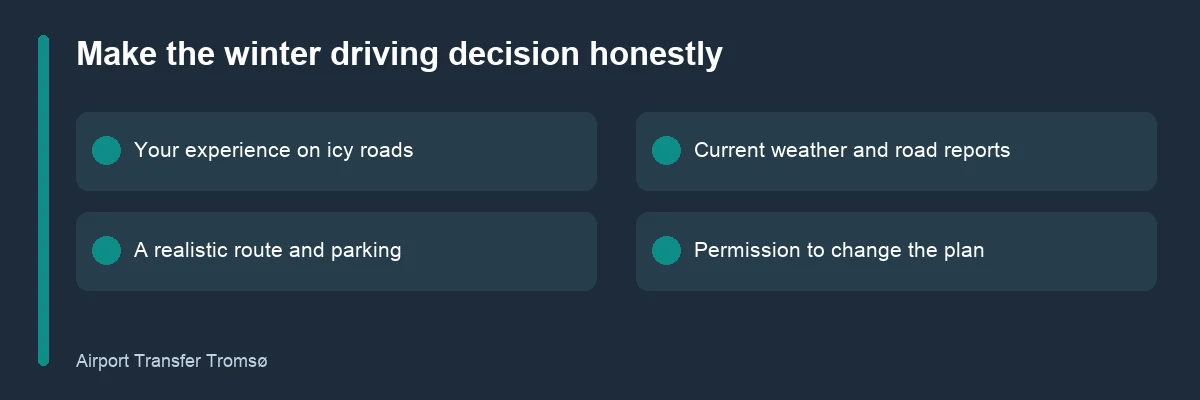
A hire car gives independence, but winter is a poor time to learn how you react to icy roads. Visit Tromsø describes narrow, winding roads, changing visibility and slippery surfaces as important challenges. If you lack winter-driving experience, public transport or an organised outing can make better sense than collecting a rental because a summer itinerary suggested one.
Check the current road and weather reports before setting off. A route that was open and comfortable yesterday may need a different decision today. Allow the nominated driver to change or cancel a plan without pressure from the group. A booked activity is not a reason to continue on a journey you are not equipped to make.
Read the rental instructions before leaving the collection point. Ask how to operate the lights, demisting and other unfamiliar controls while you are parked. Set navigation before moving, and let a passenger handle updates. Follow signs through tunnels and junctions rather than making a sudden manoeuvre when a navigation prompt arrives late.
Parking is part of the driving plan. Find a permitted place with usable access, and do not treat a snowy roadside as an invitation to stop. Check how everyone will get out safely and where they will walk. Our getting around Tromsø guide compares walking, buses, taxis and private drivers for different journeys.
A driver booked by the hour or day removes the task of driving from your group. It still needs a realistic itinerary and flexibility for weather. Send the essential stops, passenger count and return deadline, then agree the plan and price before the day.

Packing for cold, wind and time outdoors
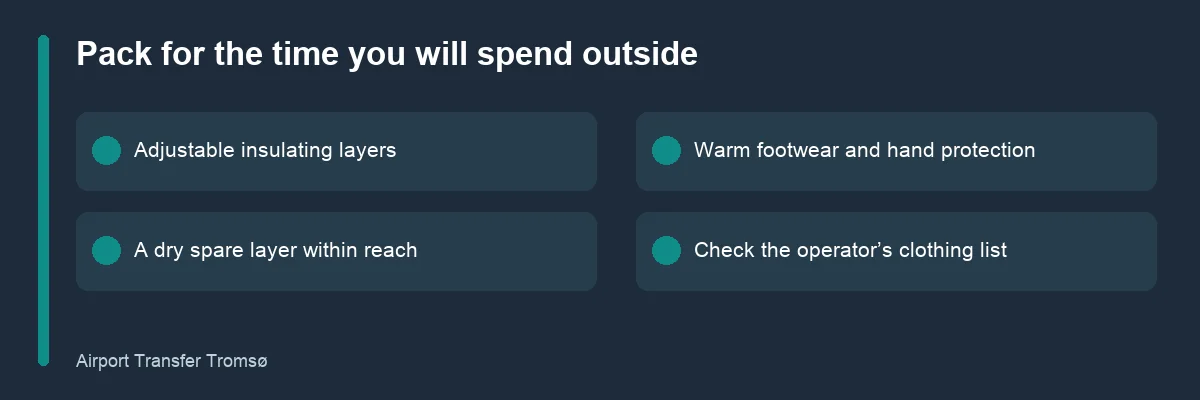
Start with the activity, not just the temperature forecast. Waiting for the aurora, sitting on a sled and walking through town place different demands on clothing. Layers let you adjust between a warm room, a vehicle and time outside. A suitable base layer, insulation and weather protection work better as a system than a single heavy item.
Pay attention to footwear and hands. Try boots with the socks you intend to wear, leaving room to move your toes. Bring a hat and gloves or mittens that suit the outing. Keep a dry spare layer available rather than packing everything underneath the main luggage. Wet clothing can make the next stop much less comfortable.
For Tromso winter weather, check the forecast for the activity location as well as the city. An outing can take you into a different setting from the street outside your hotel. Ask the operator what clothing is supplied, what sizes are available and what you must bring. A thermal suit in a listing does not answer every footwear question.
Pack the small practical items where you can reach them: phone power, personal essentials, a light for walking and the details of your booking. Keep outdoor layers accessible on arrival. A warm coat in a checked suitcase does little for the first walk if you have not thought about when you will put it on.
Footing deserves its own check. Choose suitable footwear and ask locally about grip for the conditions you encounter. Take time getting out of a vehicle and keep your hands available for balance. Short walks between an entrance and a pickup can require just as much attention as a longer outing.
Dry the equipment you intend to reuse the next morning and check it before going to bed. Separate damp gloves from the spare pair, charge the phone and put the next confirmation somewhere easy to reach. This is particularly useful after a late excursion, when the following pickup may otherwise begin with a search through several bags.
Polar night: what the light is really like
Visit Tromsø places polar night at approximately 27 November to 15 January. During this period the sun remains below the horizon, but that does not mean the whole day looks like midnight. Around midday there can be a period of twilight, with the appearance depending on cloud and weather.
Plan outdoor sightseeing around the light that is available. Keep the middle part of the day open for a view or a walk rather than assuming you can do it after a long indoor lunch. Check the actual daylight information for your dates. A photograph taken on a clear day is not a promise of the same colour during your visit.
Polar night and northern lights are different things. The first describes the sun’s position; the second depends on auroral activity and viewing conditions. More darkness does not guarantee a sighting. Our northern lights guide explains how darkness, cloud and activity fit together and why several possible evenings help.
Keep a normal rhythm if the changing light makes the day feel unusual. Agree a sensible start, meal and return plan with your group. Avoid using every dark hour for another excursion. Rest matters if you want to enjoy both the winter landscape and an evening outside, particularly when children are travelling.
December: Christmas plans and winter logistics
December offers polar-night conditions alongside the Christmas season. Treat the festive atmosphere and the practical schedule as separate parts of planning. Restaurants, shops, attractions and transport can operate differently around holidays. Check each business’s information for the date you need rather than assuming a normal weekday pattern.
For Tromso December travel, settle the essentials first: accommodation access, arrival transport, meals that need a reservation and the activity you most want. Keep the rest flexible. An apartment kitchen can be useful, but only if you have thought about when and where you will obtain supplies. Ask the property for current local guidance.
Do not build a Christmas itinerary from an event list published for a different year. Confirm the programme and opening arrangements directly before planning transport around it. If an event finishes late, decide how you will return and keep the confirmed pickup details with the ticket information.
Snow-based activities depend on conditions as well as the calendar. Read the operator’s description of what happens if the planned format cannot run. A winter date does not guarantee a particular snow surface. Choose a booking whose alternative or cancellation arrangements you understand.
| Plan | Confirm first | Leave flexible |
|---|---|---|
| Christmas meal | Reservation, service time and address | The rest of that evening |
| Outdoor activity | Meeting point, clothing and conditions policy | Other weather-sensitive stops |
| Airport arrival | Flight details, hotel access and collection | Plans immediately after landing |
| City sightseeing | Opening arrangements for your date | The order of indoor and outdoor visits |
January and February: choosing the light and pace
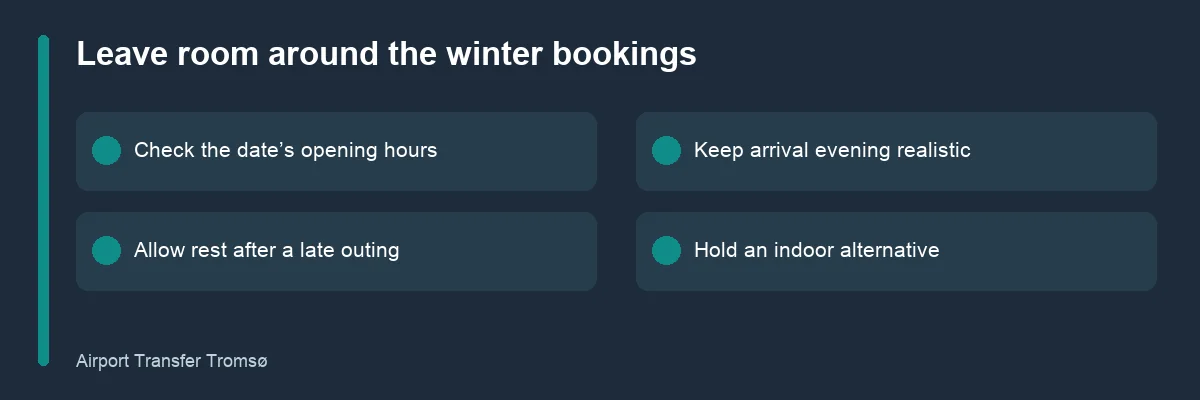
January begins within the polar-night period and changes as daylight returns. February gives a different balance of daylight and evening darkness. Choose between them by considering the whole holiday, including sightseeing, time outdoors and the activities available for your dates. Neither month guarantees good weather or aurora.
If a particular festival or event matters to you, use its current official programme. Do not assume an annual event keeps the same dates or venue. Book around a confirmed timetable, then allow enough space to reach the location and return afterwards. This is especially useful when an outdoor outing also appears on the same day.
A winter activity day can be tiring even when much of the journey is spent seated. Leave room for a warm meal and a break before an aurora outing. Two worthwhile experiences can compete for the same energy and preparation time. A less crowded schedule often leaves you with a better memory of both.
For a longer stay, keep one day lightly planned. Use it for a city visit, rest or an activity that needs rescheduling, subject to availability. Flexibility is most useful when it exists in the calendar before a disruption happens. It is harder to create after every hour has been committed to a separate booking.
Dog sledding and reindeer experiences: check the meeting point
Dog sledding on snow is generally offered from November to April, subject to snow conditions and the operator. Some kennels offer wheeled formats before suitable snow arrives. Read the actual activity description carefully: driving a dog team and travelling as a passenger involve different participation requirements.
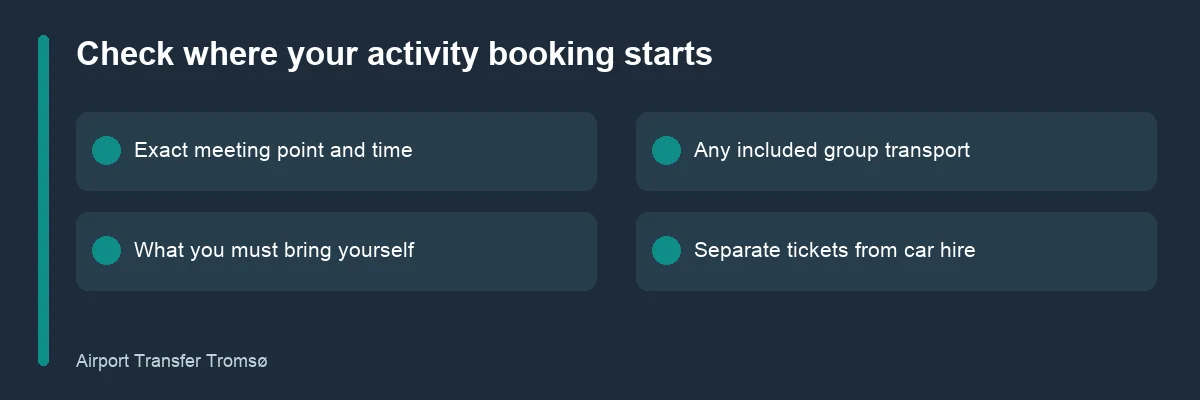
Many dog-sledding outings include transport from Tromsø. Check that before arranging another vehicle. The city meeting point may be where your booking starts, even though the kennel is elsewhere. Confirm the collection time, return arrangement and whether pickup at your accommodation is included or requires a separate choice.
Reindeer experiences vary too. Some emphasise feeding and Sámi cultural interpretation, while others include a sled ride when conditions permit. Choose the experience for what it actually includes. Check the walking involved, meal information and suitability directly with the provider, especially when travelling with young children or anyone needing additional support.
If the included group collection does not fit your needs, ask the activity operator whether arriving independently is allowed and where to meet. Only then request a separate transport quote for that exact address and time. Avoid assuming that a booking can be joined at the venue without prior agreement.
Keep activity tickets and transport confirmations separate but together in your travel folder. A car booking does not include admission to another operator’s experience. Before leaving, make sure everyone understands which provider to contact if either part of the plan changes.
New Year’s Eve: plan the return before the celebration
New Year’s Eve needs a more specific plan than simply going out and finding a ride later. Confirm the venue, start time and return address. If your group may split up, decide who is travelling together and which phone number is attached to the transport booking.
Check the current official information for any public celebration or organised display. Locations, access arrangements and programmes can change, so do not choose a viewing place from an old blog photograph alone. Look for a suitable public place with safe access, and follow any instructions at the location.
Keep the walk back realistic. A clear outward journey can feel different later, with tired passengers and changing weather. Carry the layers you need and enough phone power to use your booking details. Tell your group where to meet if you become separated.
For a prearranged car, agree a practical pickup point that the vehicle can reach. Confirm any change with the operator instead of moving the pin and assuming the driver has seen it. A single named contact makes this simpler than several guests sending different instructions at once.
Snowmobiling: the tour and the journey are separate decisions
Snowmobiling is an organised winter activity whose operating dates depend on the location, conditions and provider. Check the available dates for the exact tour rather than assuming every winter week offers the same experience. Ask what happens if snow or weather prevents the planned outing.
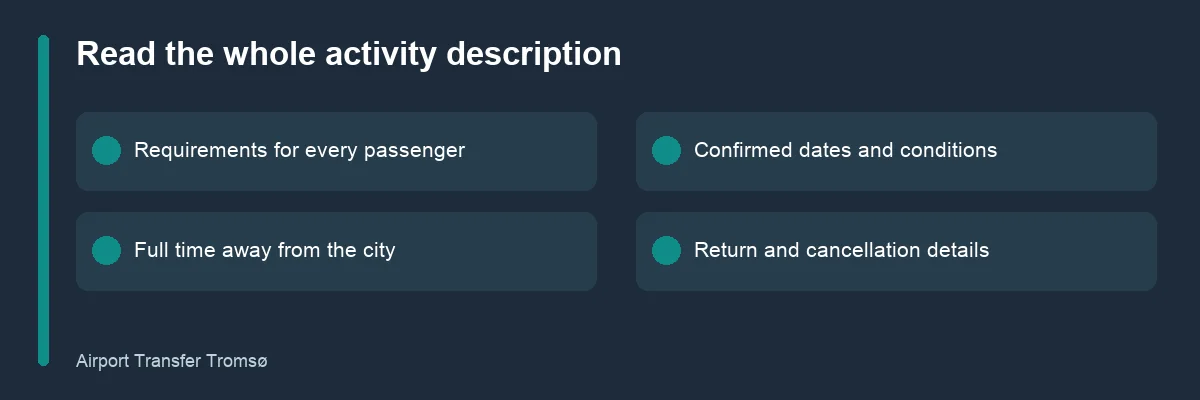
Read the participation requirements before booking. Driver eligibility, passenger arrangements, age limits and equipment rules are set by the activity provider. Check them against every person in your group. Do not book first and expect the transport driver to resolve an eligibility question at the venue.
Look at the whole duration. A product may combine road transport, preparation, a briefing, the activity and a meal. The advertised riding time is not necessarily the time you will be away from Tromsø. Avoid placing another fixed booking too close to the expected return.
Confirm the meeting point and any included transfer. If you want an independent road journey, agree that with the activity provider first and request a quote for the confirmed arrangement. Do not assume our chauffeur booking includes snowmobile hire, guiding or tickets.
Whale and orca watching: season and departure location
Visit Tromsø describes the usual whale-watching season as early November to late January, with timing and location changing as whales follow the herring. Orcas and humpback whales are among the animals sought on regional outings. Wildlife sightings cannot be guaranteed, and the season is not a fixed appointment with the animals.
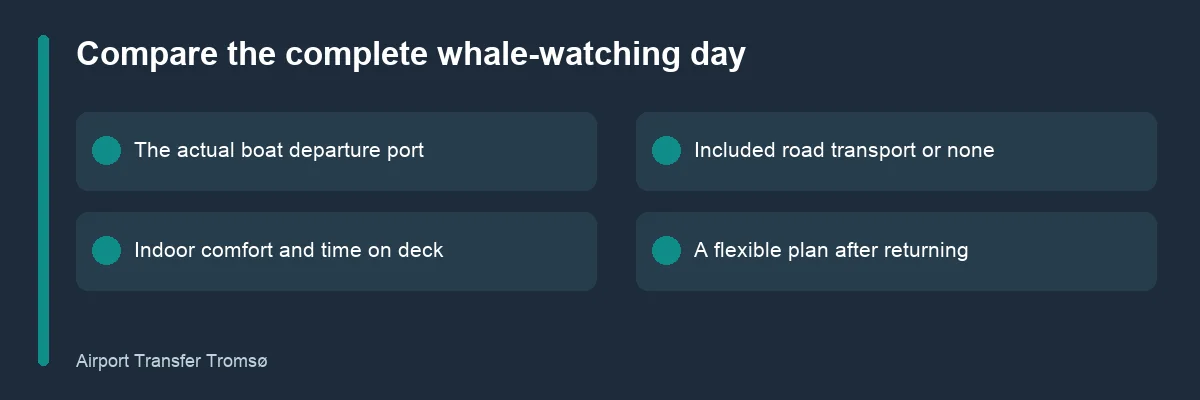
Check where the boat actually leaves. Some tours sail from Tromsø, while others combine road transport with a boat outing around Skjervøy. There are also products that start directly in Skjervøy. These arrangements create very different travel days, even when their listings use similar Tromsø wording.
Choose based on the full journey and your group’s comfort at sea. Ask about indoor seating, time on deck, meals and the conditions policy. Read the expected return time before booking an evening activity. A wildlife outing that occupies much of the day should have enough room around it.
Use included transport when it suits the booking. For any independent travel to a distant departure, establish the exact arrangement with the tour operator first. This guide does not promise a private transfer to every regional port. Our transport quote should be based on a route and service we have confirmed for you.
November: prepare for a changing season
November moves towards polar night at the end of the month. Do not assume the beginning and end offer the same daylight. Check the conditions and operating dates for the particular week you are considering, especially if a snow-based activity is central to the holiday.
Choose activities with clear information about seasonal changes. A husky experience may use a different format depending on snow, and a whale outing depends on where animals are feeding. Ask what is planned for your date and what happens if conditions change. This gives you a better basis for choosing than a generic winter photograph.
Prepare your arrival for changing surfaces and weather. Have your coat and suitable footwear accessible, save the accommodation instructions and keep contact details available. Our Tromsø Airport guide covers the arrival choices. Avoid making the first evening depend on a perfect connection between your flight and a separate excursion.
Keep indoor alternatives you would enjoy. A museum, meal or relaxed city visit can be part of a good winter trip in its own right. The purpose is to give the day another useful shape if an outdoor plan changes, rather than spending the holiday repeatedly checking a forecast.
Share the next day’s plan with everyone before the evening ends. Include the meeting point, departure time and the clothing required, rather than simply forwarding a ticket. If a provider changes the arrangement, replace the old details in your shared plan so nobody follows an earlier screenshot. One current set of instructions is more useful than a long message thread.
Frequently asked questions
When is polar night in Tromsø?
Visit Tromsø gives approximately 27 November to 15 January. The sun stays below the horizon, but there can still be midday twilight. Check daylight information for your exact travel dates.
Is a hire car necessary for winter travel?
No. A city-based stay can combine walking, buses and organised outings with transport included. Consider a driver for journeys where a direct collection or flexible schedule helps, especially if you lack winter-driving experience.
Does every winter tour include warm clothing?
No universal inclusion applies. Check the activity description for supplied clothing, available sizes and items you must bring yourself. Confirm footwear and children’s requirements directly.
Are northern lights guaranteed during polar night?
No. Polar night describes the sun staying below the horizon. Aurora visibility also depends on activity and the weather. A darker season does not remove cloud or guarantee a display.
When is the usual whale-watching season?
The usual regional season runs from early November to late January, with variation as the whales follow the herring. Confirm current dates, departure location and included transport with the operator.
How should I arrange an airport arrival in winter?
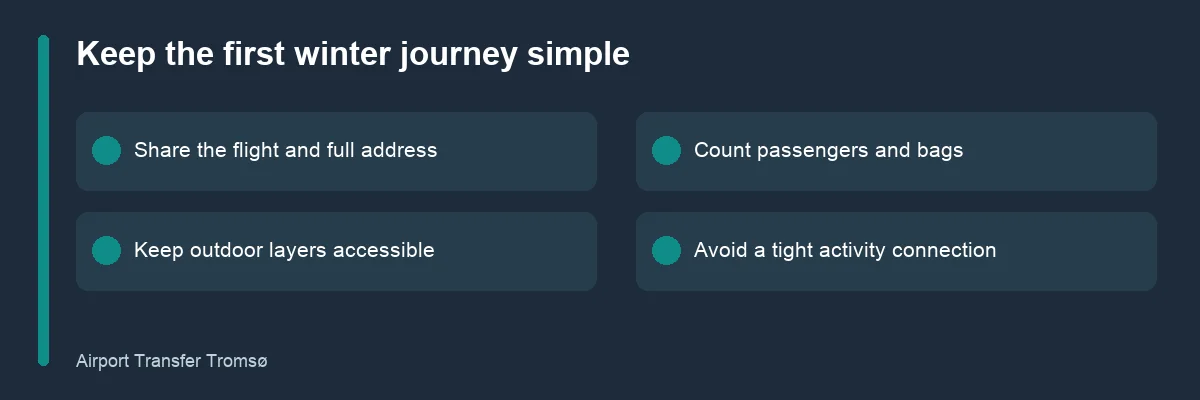
Share the flight number, full accommodation address, passenger count and luggage. Keep outdoor clothing accessible and avoid a tight connection to a separate activity. Compare a suitable bus service with an upfront private-transfer quote.
Author: Aksel Berg, Airport Transfer Tromsø team member. Seasonal information checked against Visit Tromsø; activity arrangements should be confirmed with the chosen provider.
Related guides
- Driving in Tromsø in Winter: Roads, Tunnels and Safety Tips
- What to Pack for Tromsø in Winter
- Polar Night in Tromsø: What It's Really Like
- Tromsø in December: Weather, Christmas and Things to Do
- Tromsø in January and February: Weather, Light and What to Do
- Dog Sledding and Reindeer Camps Near Tromsø: How to Get There
- New Year's Eve in Tromsø: Where to Watch and How to Get Around
- Snowmobiling in Tromsø: Tours, Seasons and Getting There
- Whale and Orca Watching from Tromsø
- Tromsø in November: Weather, Light and Things to Do